Subscribe to out newsletter today to receive latest news administrate cost effective for tactical data.
2478 Street City Ohio 90255
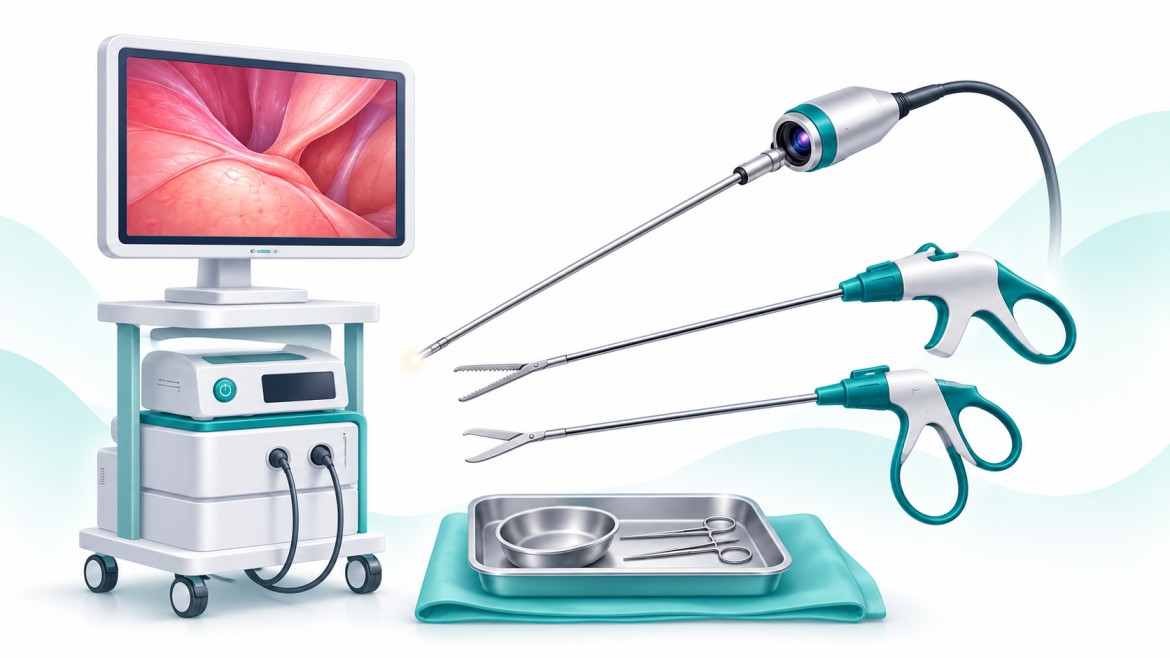
Laparoscopic surgery is a minimally invasive surgical technique used to diagnose and treat certain conditions affecting the female reproductive system. It involves making small incisions in the abdomen through which a tiny camera and specialised instruments are inserted, allowing the surgeon to perform procedures with precision.
Laparoscopic surgery may be recommended for women experiencing:
Endometriosis and related pelvic pain
Ovarian cysts
Uterine fibroids in selected cases
Blocked or damaged fallopian tubes
Pelvic adhesions (scar tissue)
Certain causes of unexplained infertility
The procedure is generally carried out under general anaesthesia.
Small Incisions: A few small cuts are made in the abdomen.
Camera Insertion: A laparoscope (a thin tube with a camera) is inserted to view the pelvic organs.
Surgical Treatment: Specialised instruments are used to treat the identified condition.
Recovery: The instruments are removed, and the small incisions are closed.
Smaller incisions and minimal scarring
Less post-operative discomfort in many cases
Shorter hospital stay compared with many open procedures
Faster recovery for many patients
Clear visualisation of pelvic organs
Recovery time and results depend on the type of surgery and the patient’s condition.
1. Is laparoscopic surgery painful?
The procedure is performed under general anaesthesia. Some discomfort, bloating, or shoulder pain may occur during recovery.
2. How long does recovery take?
Many patients return to normal activities within a few days to a few weeks, depending on the procedure.
3. Can laparoscopic surgery improve fertility?
It may improve fertility in selected cases, such as certain forms of endometriosis, pelvic adhesions, or tubal conditions. Results depend on individual circumstances.
4. Will I need to stay in the hospital?
Some procedures are performed as day surgeries, while others may require an overnight stay.