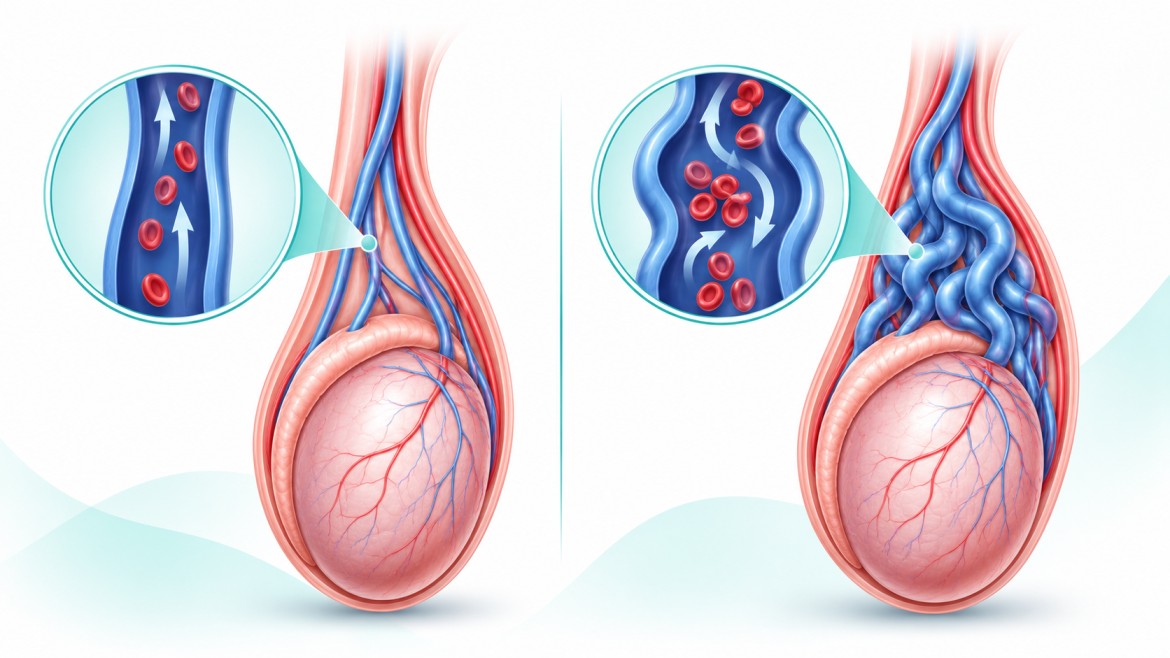
Varicocele is a condition in which the veins within the scrotum become enlarged due to improper blood flow. It can sometimes affect sperm production, sperm quality, and male fertility. At IQRAA Fertility Clinic, varicocele surgery is considered when the condition is associated with fertility problems, discomfort, or other clinical concerns.
What Causes Varicocele?
Varicocele develops when the valves inside the veins do not function properly, causing blood to collect in the veins around the testicles. This may lead to:
Enlarged veins around the testicles.
Dull pain or discomfort in the scrotum.
Changes in testicular size.
Reduced sperm count or quality in some men.
Difficulty achieving pregnancy.
How Is Varicocele Surgery Performed?
Varicocele surgery, also known as varicocelectomy, aims to close the enlarged veins and redirect blood flow through healthy veins.
Preoperative Assessment: Physical examination and ultrasound may be performed to assess the condition.
Anaesthesia: The procedure is carried out under appropriate anaesthesia.
Surgical Treatment: The enlarged veins are identified and tied or sealed while preserving important structures.
Recovery: Patients receive postoperative care and instructions to support healing.
Benefits of Varicocele Surgery
Helps correct abnormal blood flow around the testicles.
May improve sperm count and quality in selected patients.
Can help relieve varicocele-related discomfort.
May improve fertility outcomes in appropriately selected couples.
Frequently Asked Questions
1. Is varicocele surgery painful?
The procedure is performed under anaesthesia. Mild pain or swelling may occur during recovery.
2. Does varicocele affect fertility?
In some men, varicocele can affect sperm production and quality, potentially contributing to infertility.
3. How long does recovery take?
Most patients return to light activities within a few days, while complete recovery may take a few weeks.
4. Can sperm quality improve after surgery?
Sperm parameters may improve in some patients over the following three to six months, although results vary.