Subscribe to out newsletter today to receive latest news administrate cost effective for tactical data.
2478 Street City Ohio 90255
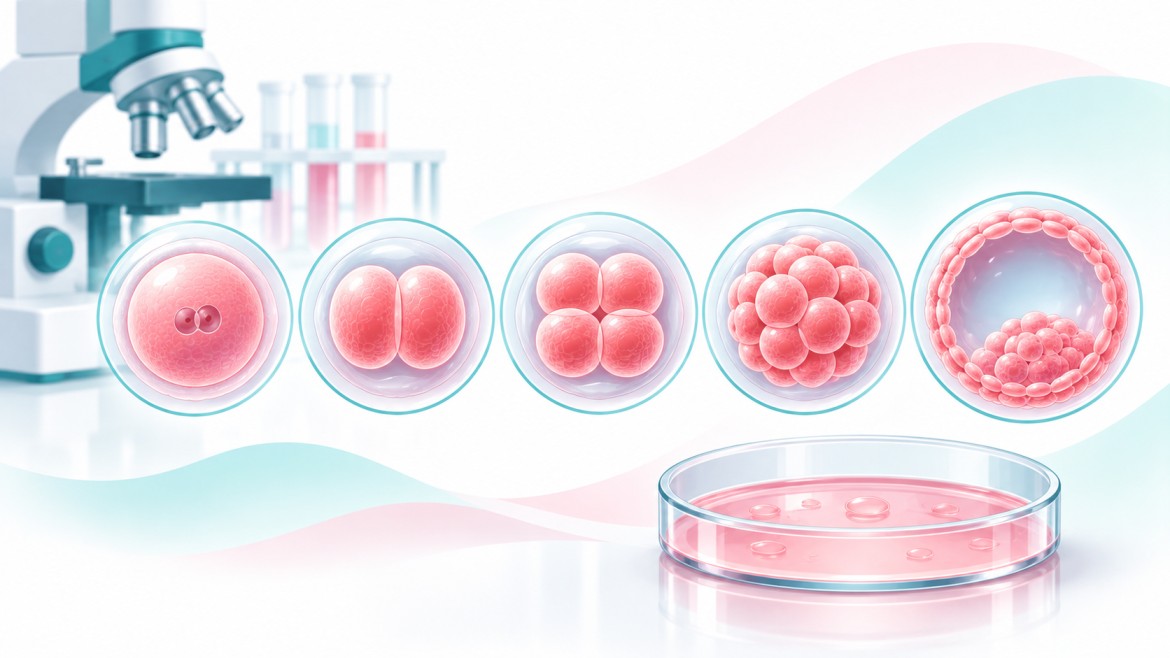
Blastocyst culture is an advanced IVF laboratory technique in which fertilised eggs (embryos) are allowed to develop for five to six days before transfer. At this stage, an embryo is called a blastocyst. This allows embryologists to observe embryo development and select suitable embryos for transfer or freezing.
Blastocyst culture may be considered for:
Patients with multiple developing embryos during IVF
Couples undergoing embryo selection as part of fertility treatment
Patients with previous unsuccessful IVF cycles, when clinically appropriate
Cases where extended embryo development may help guide embryo selection
Egg Collection: Eggs are collected from the ovaries during IVF treatment.
Fertilisation: Eggs are fertilised with sperm in the laboratory.
Embryo Development: Embryos are monitored under controlled laboratory conditions for five to six days.
Blastocyst Assessment: Embryologists assess embryo development and quality.
Transfer or Freezing: A suitable blastocyst may be transferred into the uterus or frozen for future use.
Allows observation of embryo development over several days
Helps embryologists select embryos based on developmental progress
May support better embryo selection in suitable IVF cases
Can help with planning fresh or frozen embryo transfer
May be used alongside genetic testing when indicated
Not all embryos reach the blastocyst stage, and the suitability of this approach depends on individual treatment circumstances.
1. How many days does blastocyst culture take?
It generally takes five to six days after fertilisation for an embryo to reach the blastocyst stage.
2. Is blastocyst transfer better than day-3 transfer?
It may offer advantages in selected cases, but it is not suitable for every patient. The decision depends on embryo development and clinical factors.
3. Do all embryos become blastocysts?
No. Some embryos may stop developing before reaching this stage.
4. Can blastocysts be frozen?
Yes. Suitable blastocysts can be frozen and stored for future embryo transfer.